 SK
 CZ
 EN
 DE

Operating principle of grease and starch separators
Grease and starch separators are designed for the treatment of wastewater contaminated with fatty substances (vegetable and animal fats) and/or containing starch before it is discharged into the sewer system. These substances do not dissolve in water or dissolve only to a negligible extent (starch foams heavily), so their direct entry into the sewer system causes a number of operational problems (clogging of pipes and sewers, corrosion of equipment, unpleasant odour), which prevents the proper operation of wastewater treatment plants/sewer systems. It should be emphasised that the above-mentioned separators cannot receive "black" sewage, rainwater runoff or sewage containing light liquids and mineral oils.
Separators are flow-through devices, i.e. they mechanically separate grease from the rest of the wastewater as it flows through the system (in the case of starch, the foam formed is neutralised). The separation process is made possible by the phenomenon of flotation due to the lower density of fatty substances relative to the density of water. Due to their mode of operation, separators also retain part of the easily settling suspended solids, which accumulate in the settling chamber at the bottom of the unit (sedimentation).
The basis for the correct operation of a separator is the correct determination of the nominal flow rate (the amount of wastewater flowing through the device [l/s]). This determines the basic characteristics of the separator, such as the inlet and outlet diameter, the volume of the sedimentation chamber and the volume of the separation chamber. Grease and starch separators from Gastroservis, spol. s r. o. are designed for the treatment of process wastewater with flow rates from 0.5 to 30 l/s (standard range). At the customer's request, we also supply units with a higher flow rate.
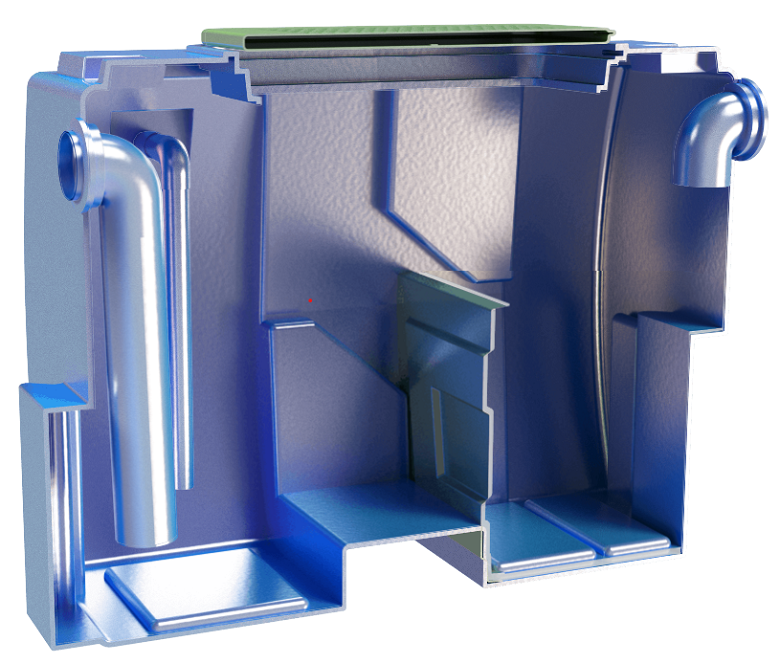
Construction of the grease and starch separator
Application of grease and starch separators
The separators are manufactured in accordance with the PN-EN 1825-1 standard and bear the CE marking.
They are used in establishments such as – restaurants, hotels and guesthouses, catering facilities, canteens, bars, fast food - quick-service outlets, pubs, motorway restaurants, the food industry - meat processing plants, slaughterhouses, dairies, cheese factories, etc.
Advantages of grease and starch separators
Automatic grease separators GS are the right solution for grease management with:
GreaseShield removes food waste and fats, oils and grease (FOG), including saturated animal fats, protecting drain pipes from repeated blockages and expensive pump-outs, offering excellent operational, environmental and cost-saving benefits:
Operational benefits:
Environmental benefits:
Financial benefits:
• Eco-certified – The lowest energy consumption in its class, resulting in electricity cost savings.


